


Article
Ego Is the Silent Killer of Leadership

After almost 50 years of coaching leaders, it’s time for me to be very honest about what I’ve seen.
The ego has destroyed more leaders than incompetence ever did.
That may sound harsh, but I have watched it happen too many times. Smart people. Talented people. Visionary founders. Hard-driving executives. People with charisma, intelligence, courage, ambition, and often a real desire to build something meaningful.
Then success arrives.
And success is where the ego really gets dangerous.
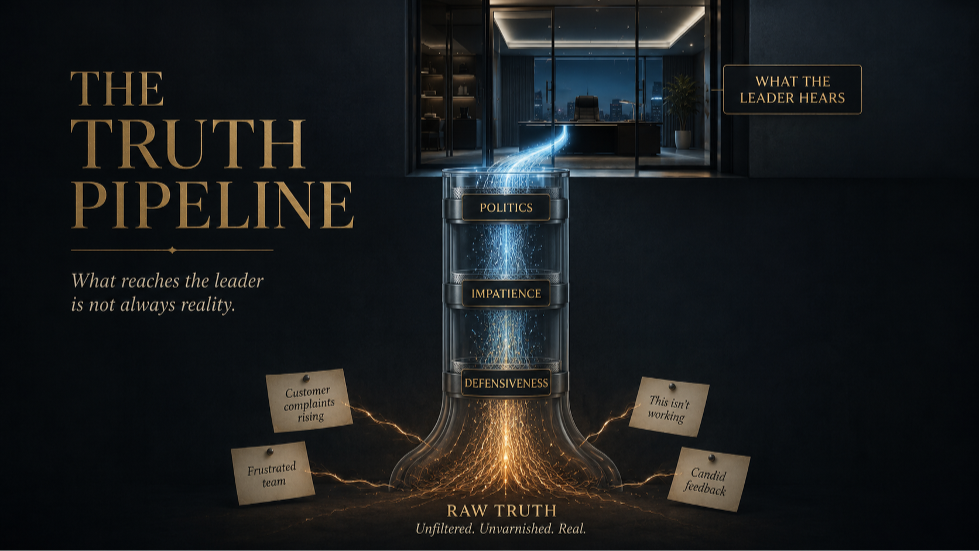
When leaders are struggling, reality still has a vote. Customers complain. Investors push. Employees leave. The market humbles them. But once leaders gain power, money, status, and a circle of people who need something from them, reality gets quieter.
People start editing the truth.
They laugh at jokes that are not funny.
They soften bad news.
They call emotional reactivity “passion.”
They call micromanagement “high standards.”
They call arrogance “confidence.”
They call avoidance “strategic patience.”
And before long, the leader is no longer leading a company. They are leading a carefully managed psychological ecosystem designed to protect their self-image.
That is when things get expensive.
Ego Is Not Just Arrogance
Most people think ego means arrogance. That is too simple.
Ego is the mental picture you carry of who you are. Your role. Your competence. Your status. Your worth. Your story about what makes you special. It is not useless. Early in life, ego helps organize identity. It helps us function, strive, compete, and build.
But here is the problem.
The ego starts as a tool and quietly becomes the boss.
At first, you use it to orient yourself. Later, you defend it like your life depends on it.
If you are identified with being the smartest person in the room, disagreement feels like an attack.
If you are identified with being the founder, criticism of the company feels like criticism of you.
If you are identified with being decisive, uncertainty feels humiliating.
If you are identified with control, delegation feels like loss.
If you need admiration, honest feedback feels unbearable.
And if you are identified with being a great leader, congratulations. You have just made it harder to become one.
The Ego Is Always Looking for a Deal
The hidden bargain beneath ego-driven leadership usually sounds like this:
If I succeed enough, I will finally feel secure.
If I am admired enough, I will finally feel worthy.
If I control enough, I will finally feel safe.
If I win enough, I will finally be beyond doubt.
The problem is that the bargain never fully pays off.
Achievement does not end the hunger. Often it intensifies it.
The leader gets the title, the funding, the exit, the recognition, the keynote invitation, the glowing article, the larger house, the more impressive friends. And somehow the inner machinery keeps running.
More proof.
More control.
More admiration.
More winning.
More reassurance.
This is why some extremely successful leaders remain strangely restless, defensive, brittle, and dissatisfied. They have achieved enough to impress the world, but not enough to quiet the self they are trying to protect.
That is not a moral failure. It is a psychological trap.
And leadership gives that trap a very large stage.
How Ego Distorts Leadership
Here is the brutal part.
The ego does not just make leaders annoying. It distorts judgment.
When the ego feels threatened, the leader stops seeing clearly.
They stop listening when challenged.
They become rigid instead of adaptive.
They surround themselves with people who agree with them.
They take credit and avoid blame.
They micromanage because they cannot trust others.
They confuse being questioned with being disrespected.
They interpret disagreement as disloyalty.
They protect the image instead of examining the truth.
The more power they have, the worse it gets. Not because power makes everyone corrupt, but because power reduces corrective feedback. People defer more. They challenge less. They wait to see what the leader wants to hear.
The leader slowly loses contact with reality.
This is the great danger of executive success. The external world starts confirming the internal illusion.
The Founder Version Is Especially Dangerous
Founders are particularly vulnerable because the company often begins as an extension of their identity.
That is not all bad. In the early stages, a founder’s obsession can be essential. The company may need the founder’s force, conviction, stamina, and refusal to accept conventional limits.
But what gets a company born can also keep it from growing up.
When the founder is fused with the company, every problem becomes personal.
A product critique feels like an insult.
A senior hire’s independence feels like a threat.
A board challenge feels like betrayal.
Delegation feels like irrelevance.
Operational discipline feels like bureaucracy.
The founder says, “No one cares as much as I do.”
That may be true.
But sometimes what they really mean is, “No one validates my identity the way this company does.”
That is a harder sentence to say out loud at a board meeting.
The Great Leadership Question
After all these years, I have become less interested in the surface behavior and more interested in the motive underneath it.
Not just, “Why do you micromanage?”
But:
What are you trying to protect?
Not just, “Why do you dominate meetings?”
But:
What happens inside you when someone else has the better idea?
Not just, “Why do you avoid conflict?”
But:
What does disapproval threaten in you?
Not just, “Why do you need to win?”
But:
Who would you be if you did not?
That is where the work starts to get real.
Most leaders do not change because someone gives them a better technique. They change when they see the hidden bargain they have been making with themselves.
Self-Awareness Is Not Self-Absorption
Some leaders resist this work because they think inner development is soft, indulgent, or irrelevant to results.
That is nonsense.
Self-awareness is not sitting around admiring your emotional complexity.
It is the discipline of seeing what is actually driving you before it drives the company off the road.
A leader who cannot observe their own defensiveness will call it conviction.
A leader who cannot observe their fear will call it urgency.
A leader who cannot observe their need for admiration will call it culture building.
A leader who cannot observe their control needs will call it accountability.
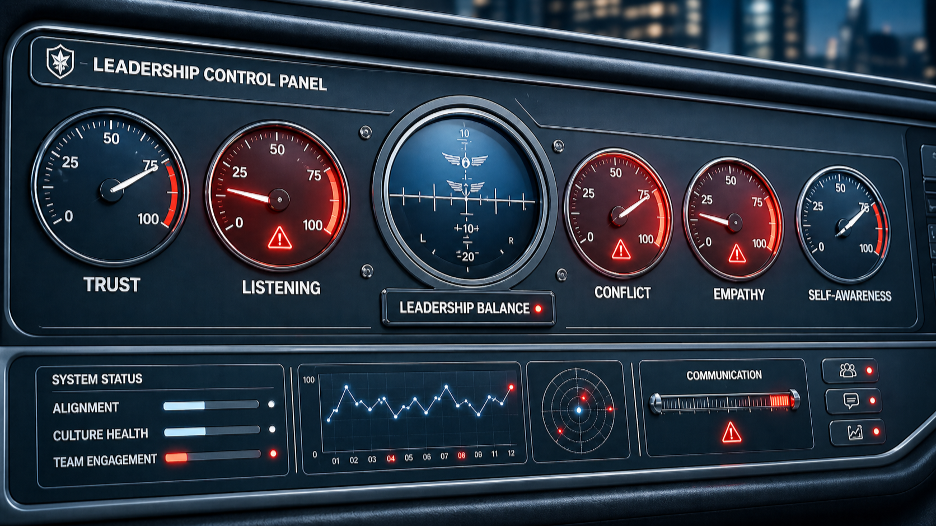
Self-awareness is not ornamental. It is operational.
It determines whether you can hear bad news, accept feedback, delegate authority, admit mistakes, make clean decisions, and separate the mission from your own self-image.
What Actually Helps
When ego is running the show, insight alone is not enough.
You can understand your patterns intellectually and still be captured by them under pressure. I have seen brilliant leaders explain their own dysfunction with great sophistication and then repeat it 20 minutes later.
So the work has to become practical.
First, notice the pattern in real time.
When you feel defensive, name it silently.
I am defending.
I am trying to win.
I am afraid of looking incompetent.
I am trying to control the room.
That small act creates space. You are no longer completely fused with the reaction.
Second, use feedback as inquiry, not verdict.
When someone gives you hard feedback, do not rush to decide whether it is accurate. Ask:
What part of me feels threatened by this?
What self-image am I defending?
What might I see if I were not protecting myself?
That shifts feedback from judgment to information.
Third, meditate.
Not because you need to become serene, spiritual, or annoyingly calm in a linen shirt.
Meditation trains the basic leadership muscle most leaders lack: the ability to observe the mind without immediately obeying it.
You notice the tightening in your chest when someone questions you. You notice the urge to defend before the other person has finished the sentence. You notice the story your mind creates to protect your image.
In that noticing, there is freedom.
Fourth, practice non-doing.
This is radical for founders and high achievers.
Sit for 10 minutes. Do not optimize. Do not plan. Do not solve. Do not check your phone. Do not turn stillness into a productivity hack.
Just sit there and watch how uncomfortable it is to not be becoming something.
That discomfort is data.
It shows you how addicted the ego is to motion, improvement, fixing, proving, and control.
The Real Shift
The goal is not to kill the ego. Good luck with that. Also, you need a functioning self to lead.
The goal is to stop being unconsciously governed by it.
You can still be ambitious.
You can still be decisive.
You can still be competitive.
You can still build something enormous.
But your ambition does not have to be compulsive. Your confidence does not have to be fragile. Your leadership does not have to be a 24-hour defense system for your identity.
That is when ego becomes something you can use rather than something that uses you.
And that is when leadership matures.
The deepest leadership question is not:
How do I become more powerful?
It is:
What is my power serving?
Because if your power is serving your ego, the company will eventually pay the bill.
And so will you.
share this
Related Articles
Related Articles

STAY UP TO DATE
GET PATH'S LATEST
Receive bi-weekly updates from the church, and get a heads up on upcoming events.
Contact Us