


Article
Emotional Intelligence is not soft, why analytical leaders need it more than you think.
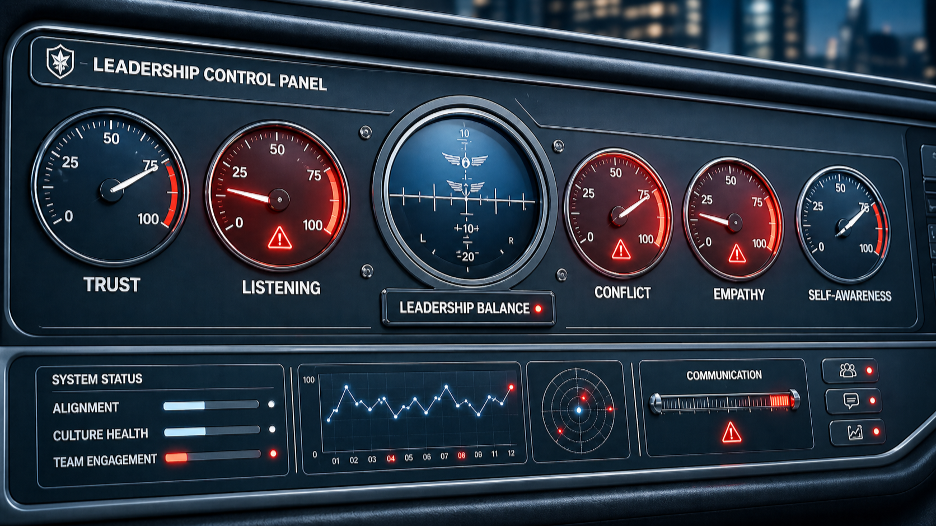
A brilliant founder walks into a leadership team meeting.
He has the data. He has the strategy. He has already seen the answer before everyone else has finished explaining the problem.
So he cuts through the noise, names the issue, pushes for action, and leaves thinking:
“Good. We finally got somewhere.”
The team leaves with a different conclusion:
“Do not challenge him unless you want to get steamrolled.”
Nobody says that out loud. They just become quieter. They edit themselves. They bring problems later than they should. They stop offering half formed ideas. They wait to see what the founder already believes before they speak.
The founder thinks he is increasing speed.
He is actually reducing the intelligence of the company.
That is the hidden cost of low emotional intelligence.
And it is why the whole topic needs to be rescued from the soft skills graveyard.
The phrase is weak. The capability is not.
I understand why analytical leaders distrust the phrase emotional intelligence.
It sounds vague. Sentimental. Maybe a little HR-ish.
For many founders, engineers, investors, and hard driving executives, emotional intelligence sounds like something you applaud in public and ignore when the real work starts.
Strategy matters. Product matters. Capital matters. Execution matters. Intelligence matters.
Feelings?
Please.
That reaction is understandable.
It is also wrong.
Emotional intelligence is not niceness. It is not conflict avoidance. It is not lowering standards. It is not asking everyone to share their childhood wounds before the Monday metrics meeting.
Thank God.
At its core, emotional intelligence is the ability to read, understand, regulate, and use emotional information in yourself and others so that judgment, trust, collaboration, and execution improve.
That is not softness.
That is leadership operating competence.
Logic is not enough because people are not spreadsheets.
The skeptical leader usually carries one dangerous assumption:
“If the analysis is right, people should align.”
That sounds rational.
It is not.
Human beings do not operate on logic alone. They operate through logic mixed with fear, pride, identity, status, loyalty, resentment, hope, exhaustion, trust, shame, ambition, and memory.
You cannot lead effectively while pretending that is not true.
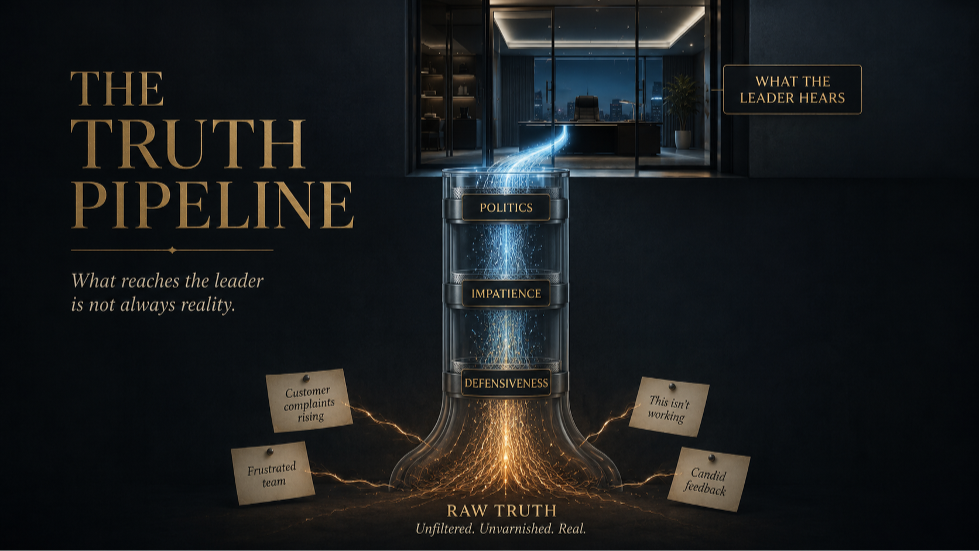
A team does not withhold bad news because the spreadsheet is confusing. They withhold it because they fear your reaction.
A direct report does not disengage only because goals are unclear. She disengages because she feels diminished, micromanaged, or invisible.
A board does not lose confidence only because of a missed number. Confidence erodes when the founder becomes defensive, unrealistic, brittle, or evasive.
The cognitive issue is often real.
But the emotional layer determines whether the cognitive solution can actually work.
This is the part many smart leaders miss.
They keep trying to solve human problems with better arguments.
Low emotional intelligence makes brilliant people misdiagnose reality.
A leader with weak emotional intelligence often sees the wrong problem.
They think the issue is weak talent when it is actually fear.
They think the issue is poor execution when it is actually unclear ownership plus low trust.
They think the issue is politics when it is actually unresolved conflict.
They think the issue is resistance to change when it is actually lack of explanation, involvement, and confidence.
They think the issue is lack of accountability when people have learned not to take initiative because initiative gets punished.
Poor emotional intelligence creates poor explanations.
Poor explanations create poor interventions.
That is how smart leaders keep solving the wrong problem with great confidence.
Emotional intelligence is not about making people comfortable.
This is the biggest misunderstanding.
Emotional intelligence does not mean making everyone feel good.
Sometimes it means saying the difficult thing more clearly. Sometimes it means confronting avoidance. Sometimes it means naming the tension everyone else is stepping around.
Sometimes it means telling a direct report:
“You are not meeting the bar, and we need to deal with that honestly.”
But emotionally intelligent leaders do one thing differently.
They separate truth from emotional leakage.
They do not dump frustration into the conversation and call it candor.
They do not confuse intensity with clarity.
They do not use honesty as a socially acceptable form of aggression.
They can challenge people without humiliating them.
That distinction matters.
People can hear hard truths when they feel respected.
They defend against hard truths when they feel attacked.
The message may be the same.
The impact is not.
The four capabilities that matter most.
For skeptical leaders, emotional intelligence comes down to four practical capabilities.
Self awareness means noticing your state before your state runs the meeting. It means catching irritation before it sharpens your tone. It means recognizing when your need to be right is overpowering your desire to understand.
Self regulation means not becoming the captive of your first reaction. You can feel defensive without becoming defensive. You can feel impatient without rushing the conversation. You can feel threatened without needing to dominate. The team should not have to manage the leader’s nervous system.
Social awareness means reading the emotional signals underneath the words. Analytical leaders often hear the content but miss the hesitation, fear, resignation, or guardedness underneath it. This matters because people rarely tell the whole truth directly when power is involved.
Relational skill means turning emotional intelligence into behavior. Can you give feedback without crushing morale? Can you create room for dissent? Can you repair after conflict? Can you challenge someone’s thinking without making them smaller? These are not decorative skills. They are how organizations become honest, resilient, and fast.
Under pressure, emotional intelligence becomes visible.
Anyone can sound emotionally mature when things are going well.
Pressure tells the truth.
When the company misses the quarter, when the product launch slips, when the board gets nervous, when a key hire disappoints, the leader’s real operating system shows itself.
Some leaders become clearer under pressure.
Others become sharper, colder, more controlling, more dismissive, more avoidant, or more reactive.
The team watches this closely.
They are deciding what kind of truth the system can handle.
The organization is not shaped mainly by who the leader is on a good day.
It is shaped by who the leader becomes when things go sideways.
Five practical experiments.
You do not need to become fake, sentimental, or theatrically vulnerable.
You need to become more accurate.
1. Treat emotion as data, not truth. Your irritation may tell you that someone is avoiding responsibility. It may also tell you that you feel threatened, overloaded, impatient, or embarrassed. The emotion is data. It is not necessarily the conclusion.
2. Ask about your impact, not just your intent. After important meetings, do not only ask, “Did we make the right decision?” Ask, “Did people become more open or more cautious? Did I invite better thinking or impose my own? What did people stop saying once I entered the conversation?”
3. Slow down the jump from perception to conclusion. Ask one more question before giving your view. Let the silence last two seconds longer. Summarize the other person’s position before you challenge it. This is not weakness. It is better data collection.
4. Combine high standards with dignity. You do not have to choose between candor and empathy. Weak leaders avoid the truth to preserve comfort. Brutal leaders tell the truth in ways that damage trust. Mature leaders tell the truth in ways people can actually use.
5. Pay attention to emotional residue. After a hard conversation, ask yourself: What did I leave behind? Clarity or shame? Resolve or resentment? Ownership or compliance? Trust or caution? Over time, that residue becomes culture.
The hard truth.
In the early stages of a career, raw intelligence can carry you a long way.
But at higher levels, other people become the medium through which nearly all important results happen.
That is where emotional intelligence stops being optional.
You do not need to become softer.
You do not need to speak in therapy language.
You do not need to lower standards.
You need to become more complete.
Because the leader who sees only the logic of the situation is not more rational than everyone else.
He is missing part of reality.
And reality, as founders eventually learn, charges interest.
share this
Related Articles
Related Articles


STAY UP TO DATE
GET PATH'S LATEST
Receive bi-weekly updates from the church, and get a heads up on upcoming events.
Contact Us